MOROCCO
Unlike most Middle Eastern and Arab countries, Moroccans consume green mint tea rather than black tea. Tea was introduced to the country around the eighteenth century through the trades with European countries. Within the culture, tea is very significant. It is served during the holy fasting season of Ramada. During the fasting periods, tea is served before the fast and also served to break the fast. Tea has become part of a rich lifestyle, new friends are given tea to establish good bonds and peace. Due to the main religion of Islam, any alcoholic beverages are prohibited. Therefore tea replaces alcohol, and has become the beverage to enjoy in social events. The country is considered the first importer of green tea internationally, thus it holds a great reputation in both traditions and quality.
EGYPT
Being the national drink of the country, its no doubt that tea is very significant. Just like Western people need coffee to function, Egyptians rely on tea. Economically, the country views the tea as a strategic crop and has several large plantations in Kenya, Sri Lanka and Ethiopia. Tea in Egypt comes in a variety. Saiidi and Koshary tea are the most common. Saiidi tea is consumed in Upper regions well the Koshary tea is consumed in
Northern regions. Koshary tea is sweetened with can sugar and fresh mint leaves. On the other hand, Saiidi tea is sweeten with large amounts of can sugar due to its bitter taste and black color. Tea houses are also very common in the country. Citizens come together to chat about politics, business or about their daily lives.
TURKEY
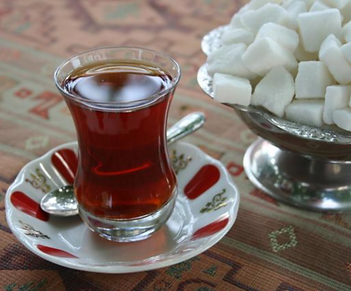
Role of tea in Turkish social life is astonishing. Tea is served almost anywhere you travel to including shopping centers, bazaars, public parks or streets. To brew their perfect cup of tea, Turks boil water first in a double tea pot. The top part of the tea pot contains the powered black tea while the bottom pot has the boiling water. With this method, it allows people to drink the tea as they wish; strong and steeped or light with more water added. Tea is poured in small tulip shaped glasses, Often, people have at least three glasses of tea with traditional Turkish biscuits or Turkish delight. Turks take pride in their methods of tea making and drinking. They do not use tea bags and prefer loose leave to make a more pure tasting tea. Although they use black tea, Turks makes sure that their final tea is a ruby red color. This color reflects their national flag color, their sport teams,and their love of culture and diversity. An old Turkish folk once stated that "conversations without tea are like a night sky without the moon". Tea is vital in Turkey and the citizens hold great pride and joy for the beverage everyday.
IRAN
The northern part of the country is suitable for the cultivation of tea. Near the shores of the Caspian sea is the popular spot for tea growing. This region provides people with employment for their livelihood. Like many other Middle Eastern regions, tea is very important to the social life and bringing people together. Each street has a little tea house called a Chaikhanes, where a lot of the socializing occurs. Traditionally, Iranians drink tea by pouring it into a saucer and putting a small cube of sugar in the mouth before drinking the tea.
Tea Culture and Rituals

The Middle East and North Africa